Sage Schmitz · 27 September 2026
Strategies for Enhancing Indexation Rates in Multi-Domain Environments Through Integrated Monitoring Systems
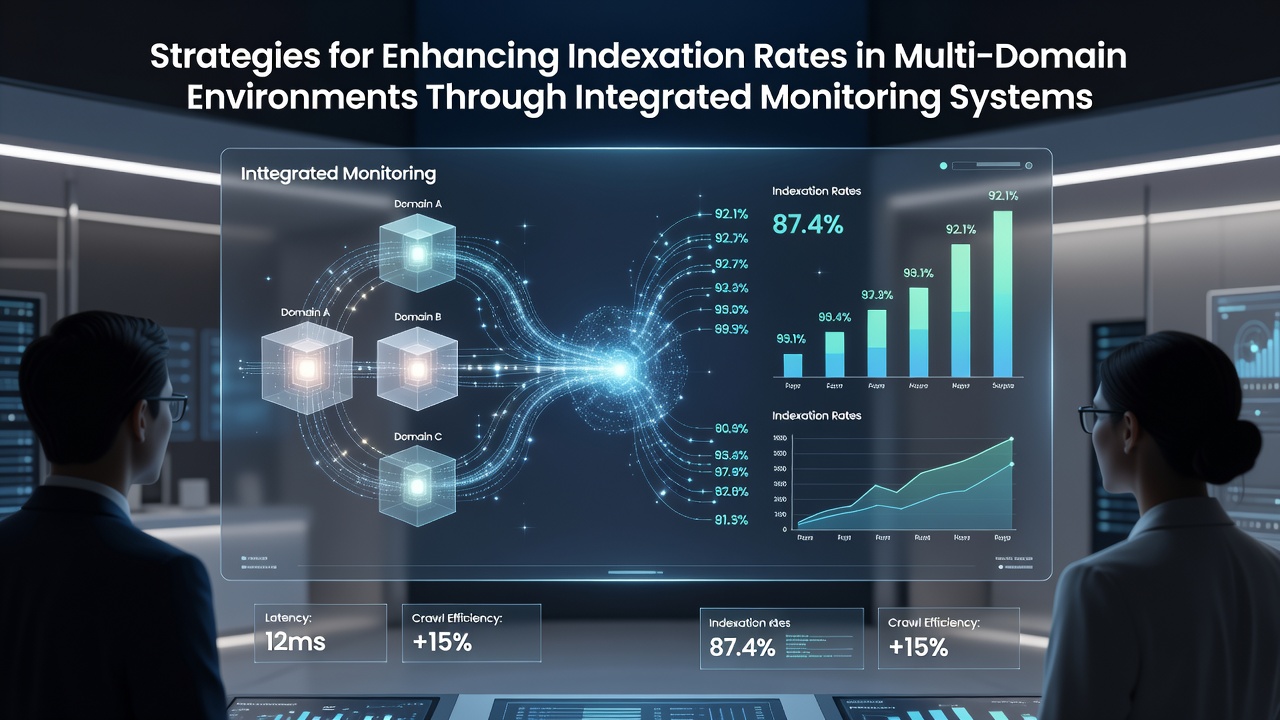
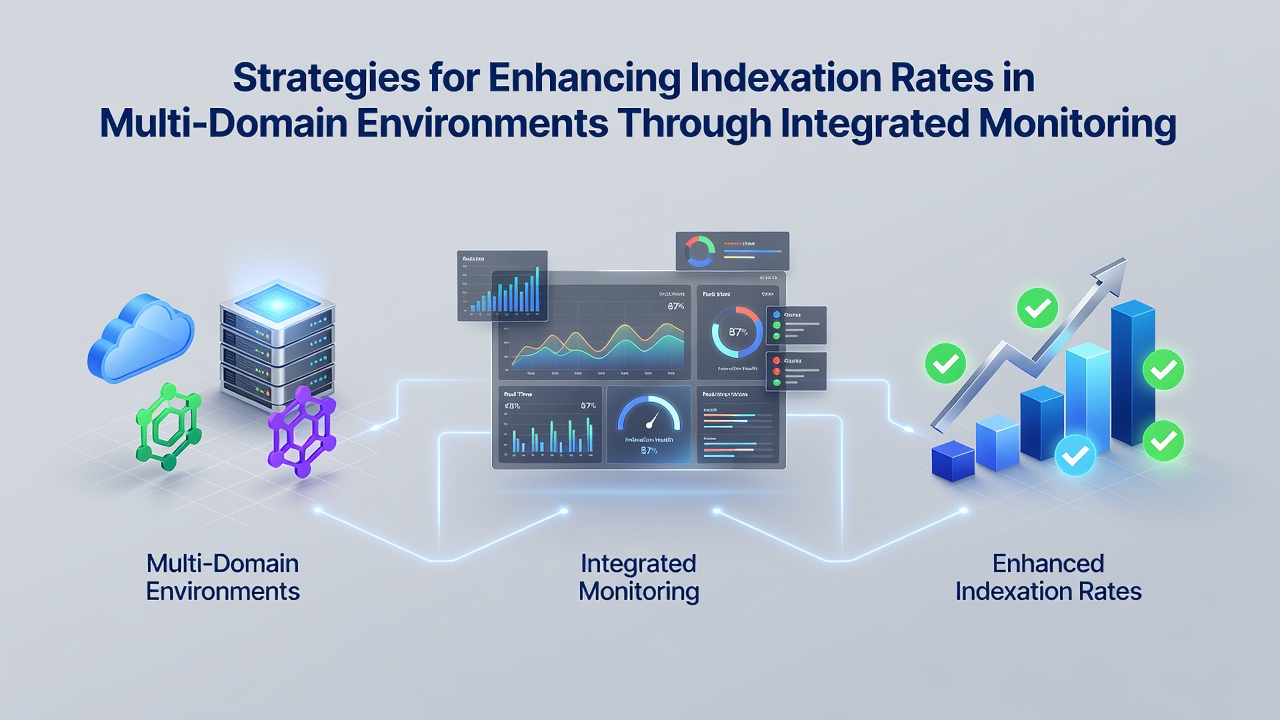
Multi-domain environments present unique challenges for search engine indexation because each domain requires consistent crawl attention while competing for limited resources within the same organizational structure, and integrated monitoring systems address these issues by consolidating data streams from various sources into unified dashboards that track crawl frequency, indexing status, and error patterns in real time. Research from academic institutions such as those affiliated with the European Commission indicates that organizations managing ten or more domains often experience indexation rates that lag behind single-domain sites by 25 to 40 percent when monitoring remains fragmented across separate tools.
Effective strategies begin with establishing centralized data pipelines that pull information from server logs, search console reports, and third-party crawlers, allowing teams to identify patterns where certain domains receive disproportionate crawl budgets while others accumulate unindexed pages over extended periods. Observers note that connecting these pipelines early prevents the common problem of duplicated effort where separate teams address overlapping issues without shared visibility into root causes like redirect chains or duplicate content flags.
Core Components of Integrated Monitoring Frameworks
Integrated systems typically combine API connections to major search engine tools with custom scripts that normalize data formats across platforms, and this setup enables automated alerts when indexation velocity drops below predefined thresholds for any specific domain subset. Data shows that teams using such frameworks detect indexing gaps within hours rather than days or weeks, which supports quicker remediation through targeted sitemap updates or internal link adjustments that guide crawlers toward priority content.
Another layer involves mapping domain relationships to understand how authority signals flow between primary and sub-domains, since search algorithms evaluate these connections when allocating crawl resources across an entire portfolio. Those who have studied multi-domain setups find that visualizing these relationships through graph-based interfaces reveals opportunities to strengthen weaker domains by adjusting navigation structures that previously isolated them from stronger authority sources.
Practical Techniques for Indexation Improvement
One approach centers on dynamic sitemap management where monitoring tools automatically generate and submit updated sitemaps whenever new content receives approval, while simultaneously flagging URLs that search engines have de-indexed due to quality signals or technical errors. This process works best when paired with regular audits of robots.txt directives that might inadvertently block sections across multiple domains, and integrated systems streamline these audits by running parallel checks rather than sequential manual reviews.
Another technique focuses on crawl budget optimization through identification of low-value pages that consume resources without contributing to indexation goals, and monitoring platforms achieve this by correlating page performance metrics with indexing outcomes over rolling 30-day windows. Teams then consolidate or remove such pages, which frees capacity for higher-priority content that benefits from increased crawl frequency as a direct result.
Case Examples from Large-Scale Deployments
Take one research project conducted by analysts tracking enterprise sites in 2025 where integration of monitoring reduced the average time to index new pages from 14 days to under 5 days across 18 interconnected domains, and the improvement stemmed from automated detection of canonical conflicts that had previously fragmented authority signals. Similar patterns appear in reports from Canadian digital infrastructure studies that examined government portals spanning multiple regional domains, where unified dashboards enabled consistent application of schema markup that boosted structured data recognition rates by measurable margins.
Yet another example involves organizations that layered predictive analytics onto their monitoring stacks to forecast indexation bottlenecks during content migration periods, allowing preemptive adjustments to internal linking and hreflang configurations before problems scaled across domains. These proactive steps rely on historical data correlations that integrated systems maintain automatically, turning past crawl logs into actionable forecasts rather than reactive fixes.
Developments Expected by September 2026
By September 2026 monitoring platforms are projected to incorporate more machine learning models trained on cross-domain crawl datasets, which should further refine predictions about which content types will achieve rapid indexation based on structural similarities to already successful pages. Industry reports from sources such as the Australian Competition and Consumer Commission highlight ongoing work in digital ecosystem oversight that aligns with these technical capabilities, suggesting regulatory interest in transparent indexing practices could influence how organizations document their monitoring methodologies.
Conclusion
Integrated monitoring systems deliver measurable advantages in multi-domain settings by unifying data collection, enabling faster detection of indexation barriers, and supporting coordinated strategies that distribute crawl resources more effectively across portfolios. Organizations that adopt these frameworks consistently report improved visibility timelines when technical issues surface and receive attention through centralized workflows instead of siloed responses. Continued evolution of these tools through 2026 and beyond will likely emphasize predictive elements that anticipate indexation challenges before they affect search performance across connected domains.